Appliance Care & Maintenance Guide
Practical, no-nonsense tips to help your appliances last longer — and to know when a quick fix beats a costly replacement.
Most appliance failures don’t happen overnight — they build up from small, preventable issues. A few minutes of upkeep each season can add years to a refrigerator, washer or dishwasher and head off the breakdown that always seems to strike on a holiday weekend. Here’s the maintenance our technicians actually recommend across San Diego and Orange County homes.
Refrigerators
- Vacuum the condenser coils every 6 months — dusty coils are the #1 cause of poor cooling.
- Replace the water filter every 6 months to protect the ice maker and dispenser valve.
- Keep a 1–2 inch gap around the cabinet so heat can escape, especially in hot inland homes.
Washers & Dryers
- Clean the dryer lint screen every load and the vent duct yearly — lint is a real fire risk.
- Leave the washer door ajar between uses to prevent mold and odor.
- Don’t overload; an unbalanced drum wears bearings and shocks out early.
Dishwashers
- Clean the filter monthly — most “won’t drain” calls trace back to a clogged filter.
- Run a vinegar cycle to cut hard-water scale, common across inland San Diego.
- Scrape, don’t pre-rinse; modern detergents need some soil to work.
Ovens & Ranges
- Test the door seal — a worn gasket wastes energy and bakes unevenly.
- Clean burner caps and igniters so gas ranges light reliably.
- Use the self-clean cycle sparingly; the high heat can stress control boards.
Room-by-room: how to care for each appliance
The quick cards above cover the headline habits. Below is the longer version our technicians walk customers through after a job — the specific, hands-on routine that keeps each machine out of the repair queue. None of it requires tools beyond a vacuum, a soft cloth and a little vinegar.
Refrigerator: protect the cold
A fridge runs around the clock, so it rewards attention more than any other appliance. Pull it out twice a year and vacuum the condenser coils behind or beneath the cabinet; when those fins clog with dust and pet hair, the compressor runs hot, struggles to hold temperature and burns out years early. Inspect the door gasket by closing it on a dollar bill — if the bill slides out with no resistance, the seal is leaking cold air and the gasket needs cleaning or replacing. Wipe the gasket channel with warm soapy water so it stays supple, keep the unit a couple of degrees below 40°F, and don’t pack it so full that air can’t circulate. If you have an ice maker or water dispenser, swap the water filter every six months to keep flow strong and flavor clean.
Washing machine: stop odor and wear before they start
Front-loaders in particular trap moisture in the rubber door boot, where mildew and that musty smell take hold. After the last load of the day, leave the door and the detergent drawer ajar so the drum can dry out completely. Run a hot empty cycle with a cup of white vinegar (or a dedicated washer cleaner) once a month to descale the drum and hoses — essential in hard-water neighborhoods. Use only HE detergent and the smallest effective dose; excess suds leave residue that feeds odor. Check the fill hoses for bulges or cracks twice a year, and never overload the drum, which throws the basket off balance and grinds down the bearings and shock absorbers.
Dryer: the maintenance that prevents fires
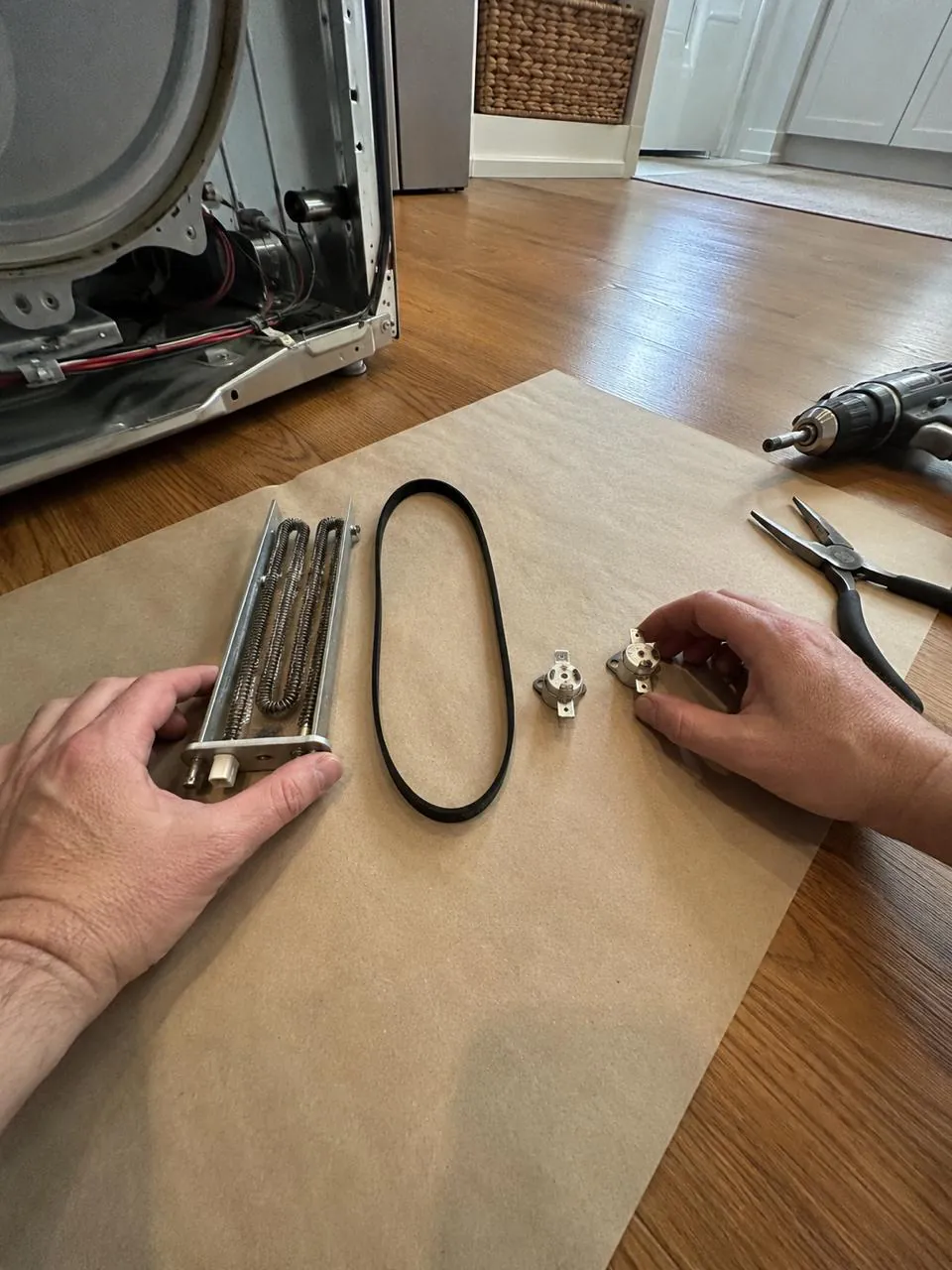
Clean the lint screen before every single load — a clogged screen is the leading cause of long dry times and overheating. Once a year, disconnect the dryer and clear the full vent run from the machine to the exterior hood; lint packed inside a duct is a genuine fire hazard and the reason many homes smell hot air or take two cycles to dry a towel. Make sure the exterior vent flap opens freely and isn’t blocked by a bird’s nest or shrubbery. If clothes come out hotter than usual or the cycle keeps extending, stop using it and book service — restricted airflow stresses the heating element and thermal fuse.
Dishwasher: keep water moving
The single most common “it won’t drain” or “dishes come out gritty” complaint traces back to a filter nobody knew existed. Twist out the cylindrical filter at the bottom of the tub monthly, rinse the debris under the tap and check the screen for trapped glass or labels. Pull off the spray arms a few times a year and poke a toothpick through any clogged spray holes so water reaches the top rack. Run an empty hot cycle with dishwasher-safe vinegar to dissolve hard-water scale that dulls glassware. Scrape plates rather than pre-rinsing them — modern enzyme detergents actually need a little food soil to grip onto.
Oven, range & cooktop: even heat, safe gas
Test the oven door seal the same way you test the fridge: a loose gasket lets heat escape, bakes unevenly and wastes energy. Wipe spills while the oven is still warm so they don’t carbonize, and use the self-clean cycle sparingly — its extreme heat is hard on control boards and door latches. On gas ranges, lift off the burner caps and clear the igniter ports so each burner lights on the first click instead of clicking endlessly or smelling of gas. For glass cooktops, use a dedicated cream cleaner rather than abrasive pads that scratch the surface.
Microwave & small built-ins
Microwaves are low-maintenance but not no-maintenance. Wipe the interior and the door seal weekly so splatter doesn’t bake on and interfere with the door switch. Over-the-range models have a grease filter underneath that should be degreased monthly and a charcoal filter that needs replacing if it vents internally. Never run the unit empty, and stop using it immediately if you see arcing or hear buzzing — those are signs for a professional, not a wipe-down.
Which appliance maintenance can I safely do myself, and when should I call a pro?
Homeowners can safely handle routine upkeep like vacuuming refrigerator coils, cleaning dryer lint screens and vents, and rinsing the dishwasher filter monthly. Call a professional once you hit electrical parts, sealed refrigerant systems, gas connections, or persistent error codes. Encinitas Appliance Repair Service runs a full on-site diagnosis for $89 across San Diego and Orange County, then quotes a firm flat-rate price before any work begins.
How do I decide whether to repair or replace a broken appliance?
Use the 50 percent rule: repair it when the fix costs less than half a comparable new unit and the appliance is within its typical lifespan. A single failed part in a newer machine almost always favors repair, especially high-end built-ins. Our $89 diagnosis gives you a firm flat-rate quote up front, so you can compare repair cost against replacement before deciding anything.
What simple habits extend the life of my home appliances the most?
Consistent small habits matter most: descale washers and dishwashers in hard-water inland areas, leave the washer door ajar to prevent mold, keep refrigerator coils dust-free, and wipe coastal stainless to fight salt-air corrosion. When something still fails, genuine OEM parts and proper repair keep an appliance running for years. Our line at (760) 477-0575 is answered 24/7, with same-day service often available.
Coastal vs. inland: seasonal care for two very different climates
We cover a service area that swings from salt-sprayed beach towns to dry inland valleys, and appliances age differently in each. The maintenance that matters most depends on which side of the county you live on.
If you live near the coast
In Encinitas, Carlsbad, La Jolla, Del Mar and the Orange County beach cities, salt-laden marine air is the quiet enemy. It pits stainless-steel fronts, corrodes door hinges and stiffens rubber gaskets faster than it does inland. Wipe exterior stainless every week or two with a damp microfiber cloth, then a drop of stainless polish in the direction of the grain to lay down a protective film. Watch for rust freckles around screws and handles and address them early. Coastal humidity also encourages mold inside washers and dishwashers, so the “leave the door ajar” habit matters even more here. If your laundry or garage is unconditioned, the damp salt air reaches the electronics too — keep things ventilated.
If you live inland
In El Cajon, Escondido, Santee, Anaheim and the warmer valleys, two forces dominate: heat load and hard water. Summer attic and garage temperatures force refrigerators and freezers to work overtime, so give them breathing room, keep coils spotless, and don’t tuck a standalone freezer into a hot, enclosed corner. Hard water leaves mineral scale that clogs dishwasher spray arms, crusts washer heating elements and chokes water lines, so the monthly vinegar descale isn’t optional — it’s the difference between a machine that lasts a decade and one that limps to seven years. A whole-home water softener pays for itself in appliance life if your water runs especially hard.
Quick checks to try before you book a visit
A fair number of “dead” appliances are simply unplugged, tripped or clogged. Running through this two-minute checklist can save you a service call entirely — and if it doesn’t fix things, the notes you take will help our technician arrive prepared.
- Confirm power. Reseat the plug, then check the breaker and any GFCI outlet — kitchens and laundry rooms often share a circuit that trips on a surge.
- Check the basics for that appliance. A dishwasher or washer that won’t drain usually has a clogged filter; a dryer that won’t heat may just need a cleaned lint screen and vent.
- Look for an error code. Photograph the display and the model/serial sticker (inside the door, behind the drawer, or on the back).
- Listen and look. Note new sounds, leaks, smells or where water is pooling — those clues narrow the diagnosis fast.
- Give it a reset. Unplug for a minute, or flip the breaker, to clear a stuck control board before assuming the worst.
If the problem survives those checks, that’s the point to call. Our phone line at (760) 477-0575 is answered 24/7, jobs run daily from 8:00 AM to 6:00 PM, and same-day service is often available. A $89 service call covers a full on-site diagnosis, and you’ll get a firm flat-rate price to approve before any work begins. You can also book a visit online at a time that suits you.
When to DIY — and when to call a pro
Plenty of upkeep is squarely a homeowner job: cleaning filters and coils, swapping water filters, clearing lint, descaling, leveling a wobbling machine and tightening a loose handle. Those are safe, satisfying and worth doing. Other repairs are not worth the risk.
- Anything electrical — frayed wiring, a failing control board, a burnt smell or repeated tripped breakers belongs to a trained technician.
- Anything gas — a gas-range or gas-dryer connection, a gas smell or a burner that won’t ignite is a safety matter, full stop. Leave it to a pro.
- Anything sealed-system or refrigerant — recharging a fridge or freezer requires certification and special equipment; guesswork here ruins the compressor.
- Anything under warranty — DIY parts or repairs can void manufacturer coverage. Genuine OEM parts and qualified labor keep it intact.
When a fix lands in that second list, our background-checked technicians handle it with genuine OEM parts and stand behind the work. For more on warranties, repair-versus-replace math and what to expect on a visit, see our frequently asked questions.
Repair vs. replace, lifespan & efficiency
When something breaks, the question is always the same: fix it or buy new? Use the 50% rule — if the repair costs less than half the price of a comparable new unit, and the appliance isn’t already past its typical lifespan, repair is usually the smarter, greener choice. As a guide, refrigerators and ranges often run 13–15 years, washers and dryers 10–13, and dishwashers about 9–12. High-end built-ins like Sub-Zero, Wolf and Viking are almost always worth repairing, since replacement runs into the thousands and a single failed component rarely justifies tearing out cabinetry.
Efficiency is the other half of the equation. A well-maintained appliance doesn’t just last longer — it costs less to run. Clean coils and clear vents cut electricity use; a tight door seal keeps a fridge or oven from working against itself; a descaled washer heats water faster; and a full (but not overloaded) dishwasher run on an eco cycle uses far less water than hand-washing. Small habits compound: every month you keep dust off the coils and scale out of the lines is a month you push back the day you’d otherwise be shopping for a replacement.
Appliance Care FAQ
Should I repair or replace my appliance?
As a rule of thumb, repair it if the fix costs less than about half the price of a comparable new unit and the appliance isn’t past its typical lifespan.
Refrigerators and ranges often run 13–15 years, washers and dryers 10–13, and dishwashers about 9–12. A newer appliance with a single failed part is almost always worth repairing; we’ll give you an honest assessment after the diagnosis.
How does an appliance warranty work with a repair?
Using genuine, manufacturer-grade parts and qualified labor keeps your manufacturer warranty intact, and our own work is guaranteed.
Generic parts or DIY fixes can void coverage. We use the correct components so your appliance stays protected, and we stand behind the workmanship we provide.
What should I check before calling for service?
Confirm power and water supply, reset the breaker, and make sure filters and vents aren’t clogged — small things solve a surprising number of issues.
If the appliance still misbehaves after those checks, note the model number and what it’s doing (sounds, error codes, leaks) and book a diagnosis. The detail helps us arrive with the right parts.
How often should appliances be serviced?
A quick maintenance check once a year keeps most appliances running efficiently and catches small faults before they fail.
Coastal homes should watch for salt-air corrosion on stainless and seals, while inland homes should descale dishwashers and washers regularly because of hard water.
Need a professional hand?
Book a diagnosis online or call — we’ll sort it out fast.
Readers who used the care advice
These reviews connect repair visits with the practical maintenance guidance on the site.
The coil-cleaning advice explained why our refrigerator was working so hard. The technician confirmed it during the visit.
We cleaned the dishwasher filter before calling, then knew the problem was bigger. That made the service call more focused.
The dryer vent section probably prevented a second appointment. We had them repair the dryer and fix the airflow issue.
The repair-or-replace rule was helpful. We used it with the technician and decided to repair a high-end oven.
The seasonal care tips fit our area. Coastal moisture really was part of our gasket problem.
I liked that the guide was practical, not just generic advice. The technician gave the same recommendations in person.