Washer & Dryer Repair Across San Diego County & Orange County
When the laundry piles up because the machine quit, we get the cycle turning again — usually the same day.
A washer that won't spin or a dryer that tumbles cold turns laundry day into a logistics problem fast — wet clothes sitting in the drum, a hamper that keeps growing, and a trip to the laundromat you didn't plan for. Encinitas Appliance Repair Service exists to make that a short interruption instead of a long one. From our base in Encinitas we cover the coast, the inland valleys, and most of Orange County, scheduling jobs daily between 8:00 AM and 6:00 PM with same-day visits available often. Washers and dryers are mechanical workhorses, and the two share a lot of failure logic: belts, motors, bearings, control boards, and sensors that drift out of spec after years of cycles. We service both stacked and side-by-side sets, front-loaders and top-loaders, gas dryers and electric dryers, and the all-in-one washer-dryer combos that have become common in condos and ADUs. Whatever the configuration, our technician arrives with the diagnostic tools and common parts to turn most service calls into a same-visit fix. Your visit starts with a flat $89 service call that covers a full diagnosis. Once we know exactly what failed, we quote a firm flat rate — parts and labor together — before any wrench turns. You approve the number first; there are no surprise add-ons and no hourly meter running. Listed starting prices are estimates only; the real quote comes after we've seen the machine.
What we repair on washing machines
Washers fail in a handful of predictable ways, and we handle all of them. The most common call is the no-spin or no-drain machine: clothes come out soaked because the drain pump is clogged with coins and lint, the lid switch or door lock has failed, or the drive belt has stretched and slipped. We also chase down water that won't fill — usually a bad inlet valve, a tripped pressure switch, or a kinked supply hose — and the opposite problem, a washer that overfills or leaks onto the floor from a cracked tub seal, a failed door boot, or a loose hose clamp. Vibration and walking are another frequent fix. A front-loader that bangs and marches across the floor on the spin cycle has usually worn out its shock absorbers, suspension springs, or the spider arm behind the drum; a top-loader that thumps often needs new snubber pads or a balance ring. We replace drum bearings that have started to roar, motor couplers that have sheared on direct-drive units, and control boards that throw error codes or leave the machine dead at the panel. Because modern washers lean heavily on electronics, we also reset and recalibrate the sensors that govern load weight, water level, and cycle timing. A machine that stops mid-cycle, won't advance, or flashes a code isn't always broken hardware — sometimes it's a sensor or a firmware hiccup, and diagnosing that correctly saves you the cost of a part you didn't need.
What we repair on dryers — and the safety check that comes with it
On the dryer side, the headline complaint is heat: the drum turns but the clothes stay damp. On electric dryers that points to a blown heating element, a failed thermal fuse, or a tripped high-limit thermostat; on gas dryers it's usually the igniter, the flame sensor, or the gas valve coils. We carry these parts for the common platforms and replace them in a single visit whenever stock allows. We also fix dryers that won't tumble — a snapped drive belt, a seized idler pulley, or worn drum rollers and glides that make the load grind and squeal — and dryers that run but never shut off, which usually traces to a faulty moisture sensor or cycling thermostat. A unit that's dead at the start button gets the door switch, thermal fuse, and control board checked in sequence. Every dryer repair includes a look at the part most homeowners never think about: the vent path. A clogged lint duct is the single biggest cause of long dry times and the leading cause of dryer fires nationwide. We check the internal lint trap housing and the transition duct, and we'll flag a restricted or crushed vent line so you can keep the machine running hot, fast, and safe. It's a small step that protects both your energy bill and your home.
Front-load vs. top-load, gas vs. electric: why the diagnosis differs
Not all laundry machines fail the same way, and an honest diagnosis starts with the design. Front-load washers are gentler on clothes and sip water, but their door boots trap residue and tear, their bearings carry more load, and they're prone to mildew odor and 'won't unlock' faults that top-loaders rarely see. High-efficiency top-loaders without an agitator use a clutch and shifter assembly that can wear, while classic agitator machines lean on the motor coupler and lid switch. Knowing which is in front of us tells the technician where to look first. Dryers split along the same lines. A gas dryer brings a combustion system — igniter, valve, flame sensor — that an electric dryer simply doesn't have, while an electric dryer depends on a heating element and a 240-volt feed that has its own failure points, including a tripped breaker that masquerades as a broken machine. Stacked and all-in-one combo units add tight servicing access and shared drain logic that we plan around. Matching the repair to the machine is how we avoid replacing the wrong part and keep your flat-rate quote accurate.
Brands we service and the quirks we know
We repair every major laundry brand sold in Southern California, and years on these platforms means we know where each one tends to break. Samsung and LG front-loaders are popular here for their efficiency and steam cycles; we see Samsung units throw drain and door-lock error codes and LG direct-drive machines flag the rotor and Hall sensor, both of which we diagnose by code rather than by guesswork. Whirlpool, Maytag, Amana, and Kenmore share a lot of internal architecture, so parts like belts, lid switches, and motor couplers are usually in the van. GE and Frigidaire/Electrolux dryers and washers are mainstream and well-supported, while Bosch and Miele are precision European machines that reward proper diagnosis and genuine parts over improvised fixes — we treat them accordingly. Speed Queen is built like a commercial unit and is often worth repairing well past the point where you'd replace a budget brand, and Fisher & Paykel's SmartDrive top-loaders have their own electronics and direct-drive layout that we're equipped for. Whatever the badge on the lid, the goal is the same: the right part, fitted correctly, with a clear price up front.
How a service visit actually goes
Booking is simple — call us anytime, day or night, since the phone is answered 24/7, or use the online booking link to lock in a window. Jobs run daily from 8:00 AM to 6:00 PM, and same-day appointments are frequently available, especially for the no-spin and no-heat emergencies that can't wait. When the technician arrives, the $89 service call buys a complete diagnosis: we test the machine, read any error codes, inspect the mechanical and electrical components, and pin down the real cause rather than the obvious symptom. Then you get a firm flat-rate quote covering parts and labor, and nothing proceeds until you say yes. Most repairs are completed on that first visit because the van is stocked with the parts that fail most often; if a less common component has to be ordered, we schedule a prompt return and the price stays exactly as quoted.
Repair or replace? A straight answer
Sometimes the smartest fix is knowing when not to fix. As a rough rule of thumb, a repair makes sense when the machine is under roughly eight years old, the failed part is a belt, pump, valve, element, or board rather than a cracked tub or rusted drum, and the flat-rate quote lands well under the cost of a comparable new set. A well-built brand — Speed Queen, Miele, a solid Whirlpool or Maytag — also tilts the math toward repair, because the rest of the machine has plenty of life left. We'll tell you honestly when a unit is at the end of the road, and we won't sell you a costly repair on a machine that won't reward it. Either way, you get a clear recommendation, not a sales pitch.
Hard water, salt air, and keeping your laundry set healthy
Southern California is tough on washers and dryers in ways that aren't always obvious. Much of the inland service area runs hard water, which scales up inlet valves and heating components and shortens the life of pumps and seals; coastal homes from Encinitas to the Orange County beaches deal with salt air that accelerates corrosion on exposed metal and electrical connections. Both shorten the runway of a machine that's otherwise fine. A few habits stretch that runway. Clean the dryer lint screen every load and have the vent line cleared periodically; leave a front-loader's door ajar between washes to prevent mildew and door-boot odor; avoid overloading, which is the fastest way to wear bearings and shock absorbers; and use the right amount of HE detergent, since excess suds gum up pumps and sensors. When something does go wrong, calling early — at the first new noise, leak, or long dry time — almost always means a smaller repair than waiting it out.
Common washer & dryer problems we fix
- Washer won't spin or drain — clothes come out soaking wet
- Dryer runs but won't heat or takes hours to dry a load
- Water leaking onto the floor from the door boot, tub seal, or hoses
- Washer shakes, bangs, or 'walks' across the floor on spin
- Loud grinding, squealing, or thumping from a worn bearing, pulley, or roller
- Machine is dead at the panel or stops mid-cycle and won't advance
- Error code on the display you can't clear
- Washer won't fill, overfills, or the dryer won't tumble
Washer & Dryer Repair — FAQ
Why won't my washer spin or drain, leaving clothes soaking wet?
A washer that won't spin or drain is most often a clogged drain pump, a failed lid switch or door lock, or a stretched drive belt. On direct-drive top-loaders a sheared motor coupler is a common culprit. Our $89 service call pinpoints the exact cause, then you get a firm flat-rate quote covering genuine OEM parts and labor before any work begins.
How much does washer and dryer repair cost?
Every visit starts with an $89 service call that covers a complete diagnosis of your machine. Once we know exactly what failed, we quote one firm flat rate covering genuine OEM parts and labor together, and nothing proceeds until you approve it. There is no hourly meter and no surprise add-ons. Listed starting prices are estimates only; the real number comes after we have seen the unit.
Can you repair my washer or dryer the same day?
Same-day appointments are frequently available, especially for no-spin and no-heat emergencies that can't wait. Our phone at (760) 477-0575 is answered 24/7, so you can book anytime, day or night, or use the online booking link. Jobs run daily from 8am to 6pm, and because our van carries the parts that fail most often, most repairs finish on the first visit.
Why does my dryer run but not dry the clothes?
A dryer that tumbles but leaves clothes damp usually has a heating fault or a blocked vent. On electric dryers it's commonly a blown heating element, thermal fuse, or tripped high-limit thermostat; on gas dryers it's the igniter, flame sensor, or gas valve coils. We check the vent path on every dryer repair, since a clogged lint duct is the leading cause of long dry times and dryer fires.
My washer shakes, bangs, and walks across the floor during spin. Can you fix it?
Yes, a front-loader that bangs and marches across the floor on spin has usually worn out its shock absorbers, suspension springs, or the spider arm behind the drum. A thumping top-loader typically needs new snubber pads or a balance ring. We replace these with genuine OEM parts and quote a firm flat rate up front after the $89 diagnosis confirms the worn component.
Which washer and dryer brands do you repair?
We service every major laundry brand sold in Southern California, including Samsung, LG, Whirlpool, Maytag, GE, Frigidaire, Bosch, Miele, Electrolux, Kenmore, Speed Queen, Amana, and Fisher & Paykel. We diagnose brand-specific faults by error code rather than guesswork, such as Samsung drain and door-lock codes and LG rotor and Hall sensor faults, and we fit genuine OEM parts for gas and electric models alike.
Should I repair or replace my washer or dryer?
Repair usually wins when the machine is under roughly eight years old, the failed part is a belt, pump, valve, element, or board rather than a cracked tub, and the flat-rate quote lands well below a comparable new set. Durable brands like Speed Queen, Miele, Whirlpool, and Maytag tilt the math toward repair. If a unit is genuinely worn out, we will say so plainly.
Why is water leaking onto the floor from my washer?
A leaking washer usually traces to a cracked tub seal, a torn door boot on front-loaders, a loose hose clamp, or a failed inlet valve. Excess HE detergent can also gum up the pump and force water out. We find the exact source during the $89 diagnosis, then quote a firm flat rate with genuine OEM seals or hoses before any repair begins, so a small leak doesn't become water damage.
What does the error code on my washer or dryer display mean?
An error code points the technician to the failing system, but it isn't always broken hardware. A washer that stops mid-cycle or flashes a code can be a drifting load, water-level, or moisture sensor rather than a failed part. We read the codes during the $89 diagnosis to identify the real cause, which often saves you the cost of a part you didn't need.
Do you repair front-load, high-efficiency, and stacked washer-dryer units?
Yes, we service every common configuration: front-loaders, HE top-loaders, classic agitator washers, gas and electric dryers, and stacked or all-in-one combo units common in condos and ADUs. Each design fails differently, so front-loaders get checked for door-boot tears and lock faults while HE top-loaders get checked for clutch and shifter wear. We tailor the diagnosis to the exact machine in your laundry room.
What's causing the loud grinding, squealing, or thumping from my machine?
Loud noises usually mean a worn moving part. In washers a roaring drum points to failing drum bearings; in dryers a squeal or grind comes from a seized idler pulley, worn drum rollers, or glides. Catching it early means a smaller repair, so we recommend calling at the first new noise. We replace the worn component with genuine OEM parts after quoting a firm flat rate.
Are your technicians trustworthy, and do you use real manufacturer parts?
Yes, our technicians are background-checked and we use only genuine OEM parts, which matters most on precision European machines like Bosch and Miele. You'll get a clear flat-rate quote before any work starts, with no sales pitch and no surprise charges. Book a repair anytime by calling (760) 477-0575, answered 24/7, or through our online booking link for service across San Diego and Orange County.
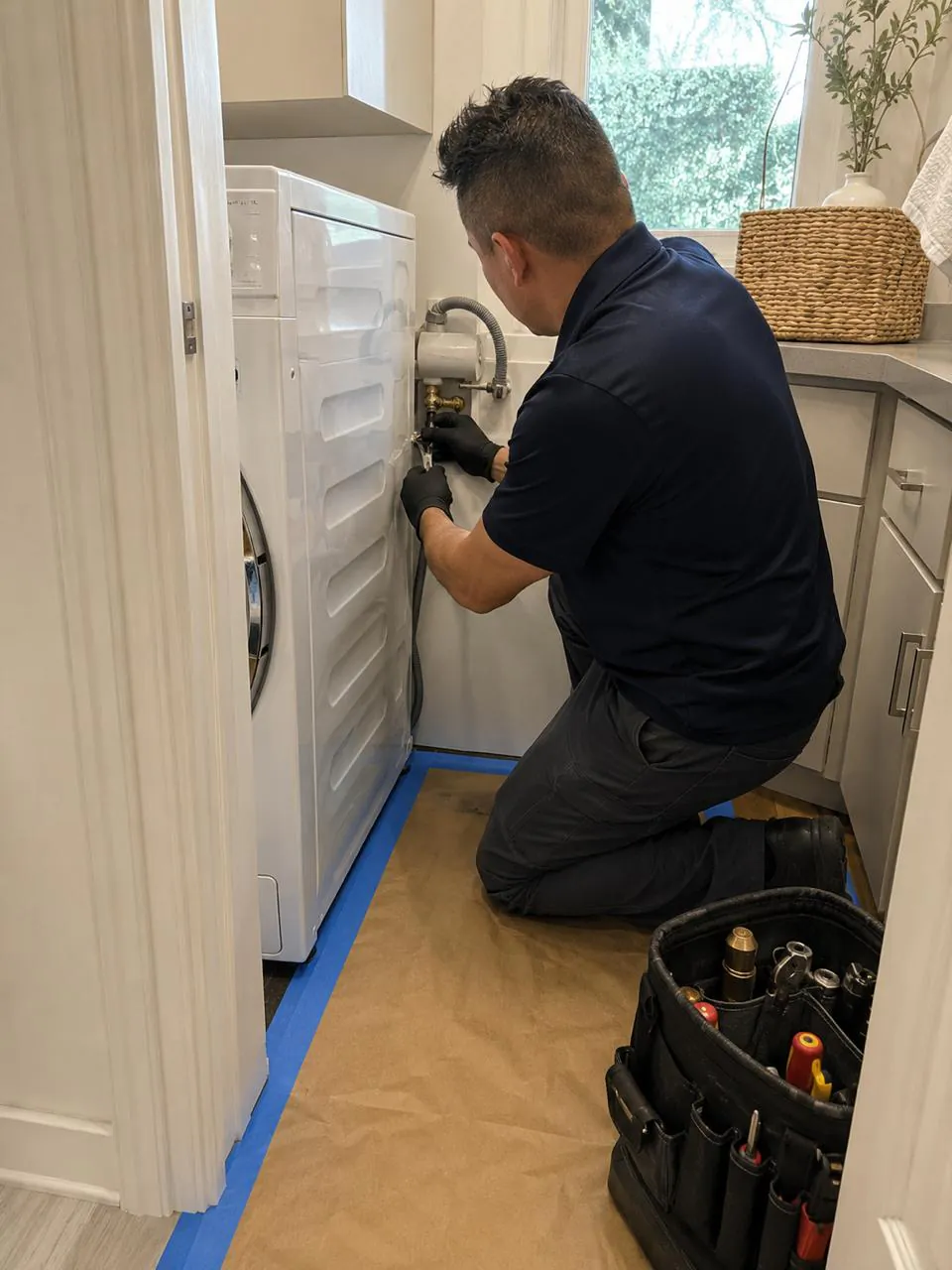
More on washer & dryer repair
- 1
What laundry machines does Encinitas Appliance Repair Service fix across San Diego and Orange County?
We repair every home laundry arrangement, from front-loaders and HE top-loaders to gas and electric dryers and the stacked or all-in-one combos common in condos and ADUs. Each visit starts with an $89 on-site diagnosis, then a firm flat rate covering genuine OEM parts and labor. Our phone at (760) 477-0575 is answered 24/7, with jobs daily from 8am to 6pm and same-day often available.
- 2
How is a washer or dryer repair priced when the part has to be ordered?
Your $89 service call covers a full on-site diagnosis, after which you get one firm flat rate for genuine OEM parts and labor before any wrench turns. If an uncommon component must be ordered, the price stays exactly as quoted and we schedule a prompt return at no extra charge. There is no hourly meter and no surprise add-ons; you approve the number first.
- 3
Why do washers and dryers wear out faster in coastal North County homes near Encinitas?
Coastal salt air from Encinitas to the Orange County beaches corrodes exposed metal and electrical connections, while much of the inland service area runs hard water that scales inlet valves, heating elements, and pumps. We fix the resulting leaks, no-heat, and no-spin faults with genuine OEM parts. The $89 diagnosis pins down the real cause, then a firm flat rate is quoted before work; call (760) 477-0575, answered 24/7.
Need Fast, Reliable Appliance Repair?
Book online in minutes and get back to what matters most.
Washer and dryer repair reviews
Laundry problems can be mechanical, electrical or venting related. These reviews focus on the details that made the repair predictable.
Our washer would fill but never spin. The tech checked the door lock, drain pump and belt before naming the fault, then finished the repair in one visit.
The dryer ran hot at the panel but the clothes stayed damp. They found a crushed vent section, fixed the airflow and did not try to sell us a heater we did not need.
We have a stacked laundry closet with almost no clearance. They moved everything carefully, protected the wall trim and still got the dryer apart cleanly.
The washer was shaking across the room during spin. Leveling helped, but they also spotted a worn suspension part and showed us exactly what had failed.
I liked that the price was flat after diagnosis. No hourly clock while the machine was open, and the quote stayed the quote.
They explained the difference between a dryer repair and a vent safety issue. That extra check made the house feel safer, not just the appliance fixed.